Software
CAESAR II
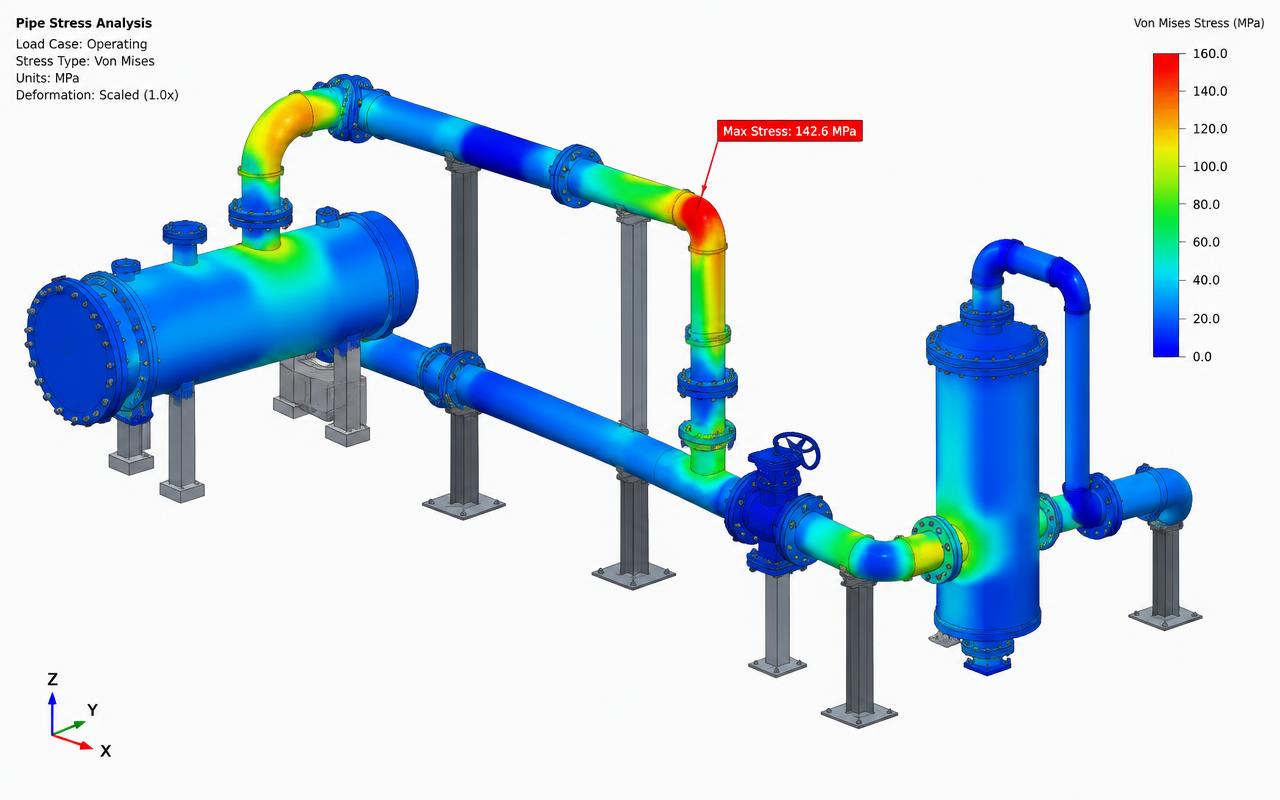
Industry-standard pipe stress analysis for ASME B31 piping systems.
Quick answer
Structural Engineering Services supports CAESAR II projects worldwide with caesar ii stress analysis, pipe stress analysis, pipe support design, skid package design — delivered by senior engineers on licensed software to international codes.
- Publisher
- Hexagon
- Discipline
- Pipe stress & flexibility analysis
- Licensing
- Commercial seats, in-house only
Capability at a glance
Our CAESAR II bench strength
Every figure below is what we run in production — licensed seats, supported versions and the scale we deliver at, so you can size us against your package before you enquire.
6
Licensed seats
CAESAR II with the structural steel and buried-pipe modules
2018–2024
Versions supported
Jobs delivered in the version your reviewer runs
600+
Lines on largest job
Full refinery unit, critical lines formally analysed
B31.1/.3/.4/.8
Codes in routine use
Plus EN 13480 and client-specific stress criteria
12–15 lines/wk
Typical throughput
Per engineer, including supports and reporting
Deliverables
What we produce in CAESAR II
A stress run that just says 'passed' helps nobody. Our CAESAR II packages tell the piping designer what to change, the civil engineer what to design for and the mechanical engineer whether the nozzle survives.
Scope your deliverablesCritical line list & criticality rating
Every line screened on temperature, size, equipment connection and service, so formal analysis effort lands only where it is needed.
Stress isometrics
Node-numbered isometrics marked with supports, anchors, guides, restraint types and analysis boundaries — the drawing the whole team works from.
Code compliance report
Sustained, operating, occasional, expansion and hydrotest cases checked to ASME B31.1, B31.3, B31.4, B31.8 or EN 13480, with the governing case tabulated.
Support schedule & spring datasheets
Support type, load and movement at every node, with variable and constant spring hangers selected and sized ready for procurement.
Nozzle & equipment load checks
Loads verified against API 610/617/661, NEMA SM23, WRC 107/297/537 and vessel nozzle allowables, with pass or fail shown against each limit.
Civil & structural load tables
Factored support, anchor and guide loads issued in the structural engineer's sign convention for pipe rack and foundation design.
Interoperability
CAESAR II file formats we work with
CAESAR II rarely starts from scratch — the model comes out of the 3D piping system and the results go back to piping, civil and mechanical. These are the exchanges we rely on.
| Format | Direction | How we use it |
|---|---|---|
| PCF (Piping Component File) | We import | Line geometry imported straight from CADWorx, AutoCAD Plant 3D or SmartPlant, so node coordinates match the 3D model. |
| CAESAR II neutral (.cii) | Both ways | Model exchange with clients and third-party checkers running a different version or re-verifying the analysis. |
| Native job (._A) | We deliver | The editable job file delivered with every report so your team can re-run any case. |
| DWG / DXF isometrics | Both ways | Isometrics in for mark-up; node-numbered stress isometrics out for the piping and support teams. |
| Word / Excel reports | We deliver | Code-stress summaries, support load tables and nozzle-check matrices in your project report format. |
| Vessel nozzle allowables | We import | Allowable loads from PV-Elite or the vendor datasheet used as the acceptance criteria rather than a rule of thumb. |
| Structural model (.std) | We import | Rack flexibility imported from STAAD.Pro where support stiffness genuinely changes the stress result. |
Working in a format that is not listed? Send a sample file with your enquiry — we confirm every exchange route before kick-off rather than discovering it at issue.
How we work
Our CAESAR II workflow
The same sequence runs on every job, from a two-day mark-up to a multi-phase package — only the duration of each stage changes.
- 1
Line list & criticality screening
Lines are split into formal analysis, approximate check and visual-only categories against the project stress criteria, and the list is agreed before work starts.
- 2
Model build
Geometry from PCF or isometrics, with correct materials, insulation, fluid density, SIFs, flexibility factors and equipment anchor points.
- 3
Load cases
Sustained, thermal expansion, occasional (wind, seismic, slug, PSV reaction), settlement, hydrotest and cold-spring cases built per the governing B31 clause.
- 4
Analysis & code check
Run, then interrogate: displacement animation, restraint load review and a stress-ratio scan per case, rather than reading the summary line only.
- 5
Support optimisation
Quality gateRestraint types, locations and expansion loops iterated with the piping designer so the fix is buildable, not just analytically convenient.
- 6
Equipment & flange checks
Nozzle loads against pump, compressor, air-cooler and vessel allowables; flange leakage by the equivalent-pressure or ASME Appendix 2 method.
- 7
Issue & close-out
Stress isometrics, support schedule, spring datasheets, civil load tables and the report issued together, with comments closed in a tracked register.
One stage is a formal quality gate — work does not move forward until a senior engineer signs it off, which is why revisions after issue stay rare.
Choosing a platform
When CAESAR II is the right choice
Most enquiries arrive naming a tool. Sometimes it is the right one; sometimes another package in our stack gets you there faster and cheaper. Here is how we decide.
Choose CAESAR II when
- Code compliance on process, power, utility or cryogenic piping — B31.1, B31.3, B31.4, B31.8 or EN 13480.
- Rotating or static equipment is in the loop and nozzle loads have to be proved against API, NEMA or vendor limits.
- Support and spring selection is needed as a procurement-ready schedule, not just a set of reaction numbers.
- The piping is hot, large-bore, jacketed, buried or subject to slug, surge or PSV reaction loads.
We would use something else when
Still unsure? Send the drawings and the deliverable you need — we will tell you which platform we would run it on, and why, before quoting.
Relevant services
Our CAESAR II services
CAESAR II Stress Analysis
Modeling and analysing critical lines in CAESAR II with full stress and load reports.
ExplorePipe Stress Analysis
Checking piping systems for sustained, thermal and occasional loads, nozzle loads and support reactions.
Explore
Pipe Support Design
Designing and detailing standard and special pipe supports, shoes, guides and anchors.
Explore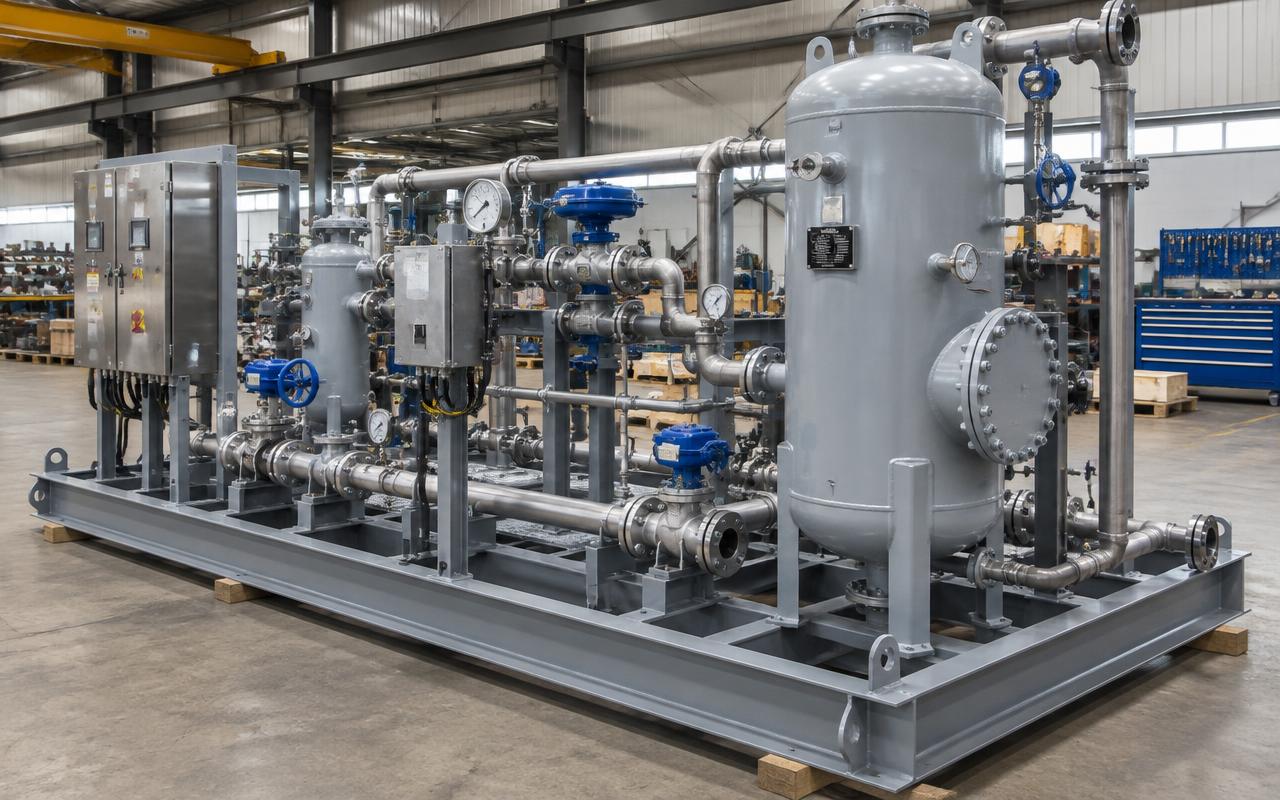
Skid Package Design
Engineering complete modular skids — vessels, piping, structure, lifting and foundations.
ExploreDirectory
CAESAR II work by market
Pick the market your project is built in. Every page sets out the governing codes, units and delivery window we work to there.
8 markets
Most requested markets
8
Start your project
Send your drawings. Get a quote in 24 hours.
Free, no-obligation proposal from a senior engineer.