Industries

Petrochemical & Refining

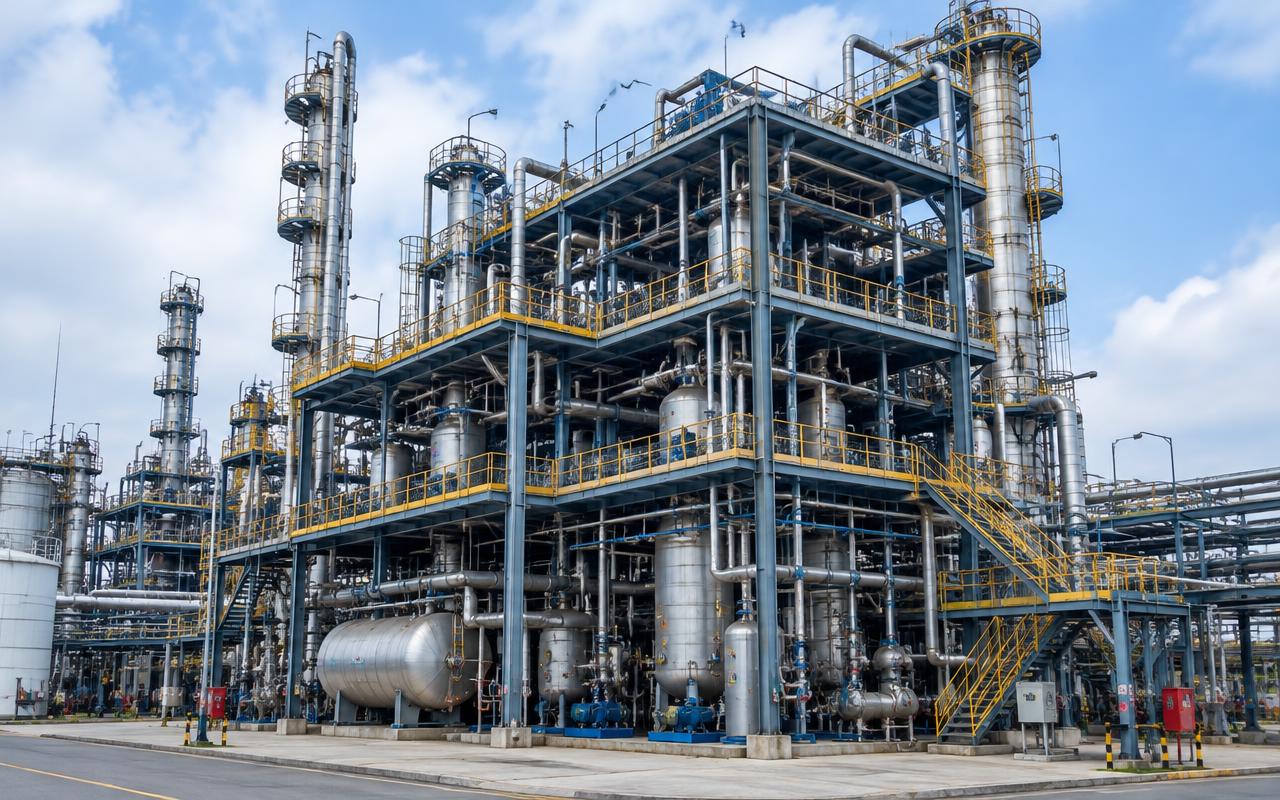
Process plant structures, heat exchangers, columns and complex piping for refineries and chemical complexes.

Quick answer

Structural Engineering Services supports Petrochemical & Refining projects worldwide with process plant structures, heat exchanger mechanical design, piping design services, equipment support structures — delivered by senior engineers on licensed software to international codes.

1,200+
Projects delivered
40+
Countries served
60+
In-house engineers
2009
Engineering since

Governing codes

  • ASME B31.3
  • ASME Sec VIII Div 1 / 2
  • TEMA / API 660
  • ASCE 7 / IBC
  • Shell DEP & client specs

Sector challenges

What makes Petrochemical & Refining engineering hard

Refinery and petrochemical work is congested, hot and rarely greenfield. The engineering problem is fitting new equipment and lines into a plant that is already full, and proving it against a client specification that runs to hundreds of pages.

Challenge 01

High-temperature and cyclic service

Reformer, cracker and hot-oil lines run where creep, thermal bowing and support friction govern the design.

How we answer it

Hot lines are modelled in CAESAR II with friction and spring-hanger selection, cold spring only where it is justified, and expansion joints used only where supports genuinely cannot absorb the growth.
Challenge 02

Congested brownfield plots

New pipework and structures have to thread through live plant while keeping access and escape routes clear.

How we answer it

Laser-scan or existing model data is federated in Navisworks, clashes are closed before IFC, and maintenance envelopes are modelled as solids so they cannot quietly be built over.

Challenge 03

Turnaround windows

Tie-in work has to be designed, fabricated and installed inside a shutdown measured in days.

How we answer it

Tie-in packages are sequenced and released early, with spool drawings and support details issued ahead of the rest, so fabrication runs in parallel with the remaining design.

Challenge 04

Stacked specifications

Shell DEPs, client piping classes and local regulator rules sit on top of ASME and sometimes contradict each other.

How we answer it

We issue a reconciled design basis that states which document wins where, agreed at kick-off, so no deliverable gets reworked over a specification clash.

Relevant services

Our Petrochemical & Refining services

Typical assets

Structures and equipment we engineer for petrochemical & refining

From a single assembly to a complete package — the asset types our petrochemical & refining teams work on week to week.

Process plant structures

Multi-level process frames, technological platforms and access steel.

Columns & reactors

Fractionators, absorbers and reactors with skirt, lug and vortex-shedding checks.

Heat exchangers

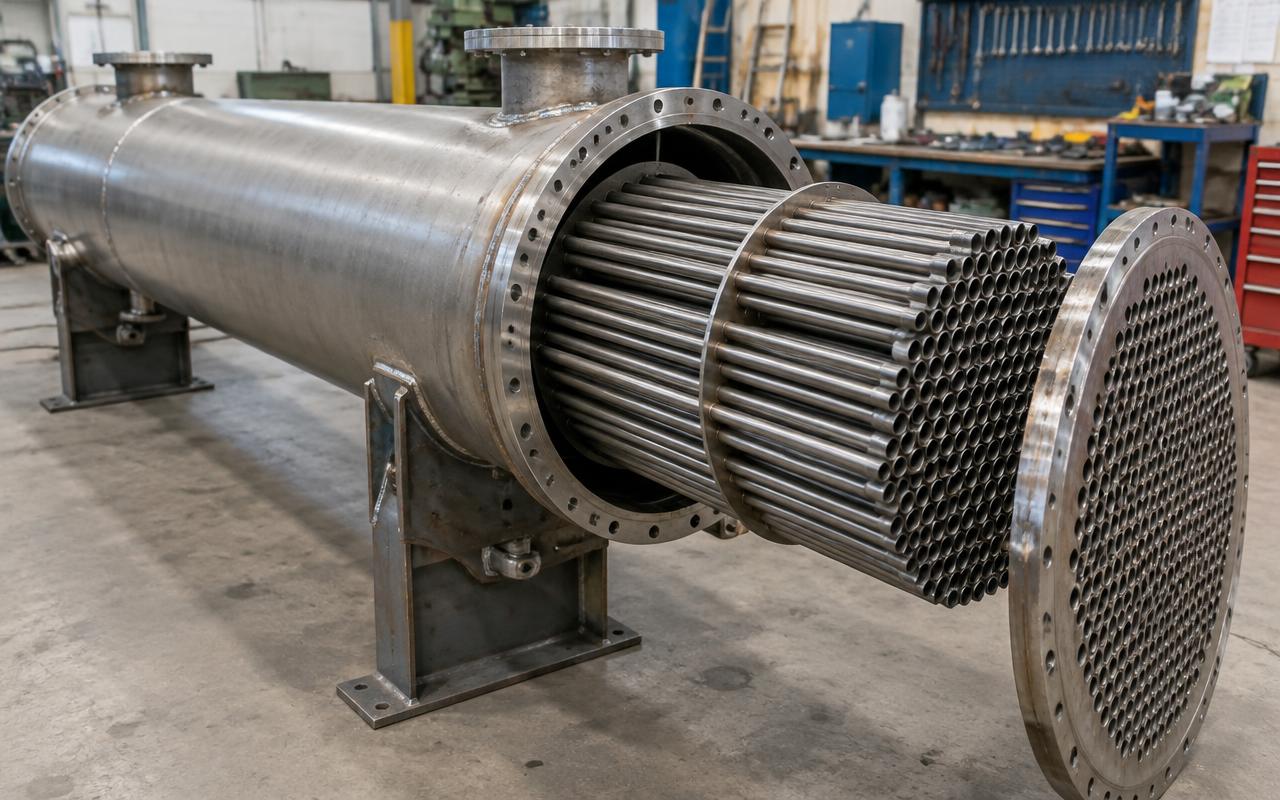
Shell-and-tube, kettle and stacked exchangers to TEMA and API 660, with bundle pull space.

Process piping & racks

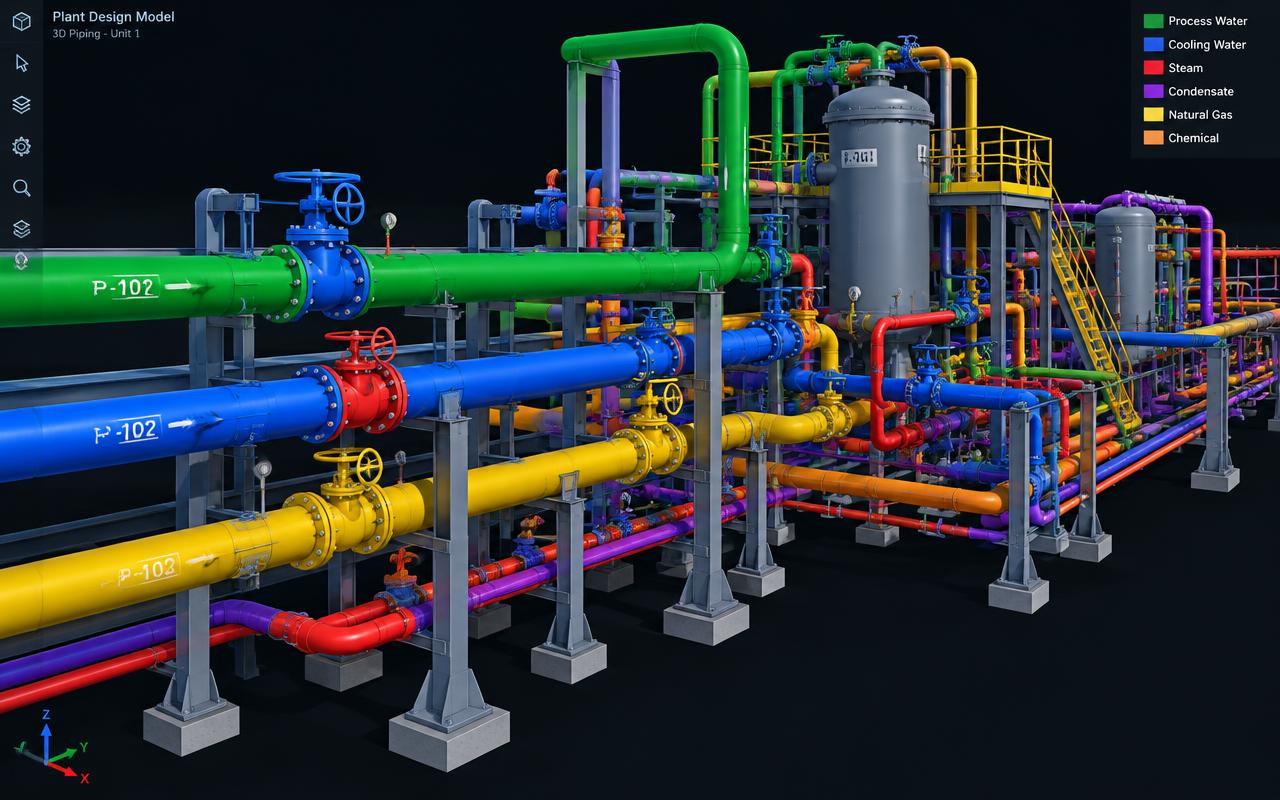
Spec-driven 3D piping, racks, isometrics and stress-critical line analysis.

Equipment supports

Pump, compressor and exchanger supports, including vibration-sensitive items.

Fired heaters & stack steel

Heater structures, breeching and ducting supports with stack framing.

Codes & specifications

What governs petrochemical & refining design

The base code is only half the story. On petrochemical & refining work the client specification usually overrides it somewhere, so we agree a single reconciled design basis before any calculation starts.

Browse all codes
  • ASME B31.3

    The governing process piping code for thickness, flexibility and allowable stress range.

  • ASME Sec VIII Div 1 / 2

    Vessel, column and drum construction across the whole unit.

  • TEMA / API 660

    Shell-and-tube exchanger mechanical design, tubesheets and expansion bellows.

  • ASCE 7 / IBC

    Wind and seismic actions on open process structures, which behave nothing like buildings.

  • Shell DEP & client specs

    Operator standards overriding code on materials, supports and allowable nozzle loads.

  • AISC 360

    Steel design for process frames, platforms and exchanger support structures.

Free quote

Not sure what you need?

Send the drawings or datasheets you already have. We will tell you what is missing and quote the scope in 24 hours.

Request a Quote

Project lifecycle

Where we plug into a petrochemical & refining project

Most clients bring us in at detailed design. We can start earlier, or pick a package up mid-stream — here is what you get from us at each stage.

01

Concept & feasibility

Options, preliminary sizing and budget tonnage, before the scheme is frozen.

Plot-space study, equipment footprints and early identification of tie-ins.

You receive

  • Design basis memorandum
  • Preliminary weight and tonnage estimate
  • Framing concept and first-pass member sizing
  • Equipment sizing and preliminary datasheets
  • Plot plan and routing study
02

FEED / basic design

Design basis, load schedules and layouts good enough to price and procure from.

Line list, stress-critical schedule and structure sizing for the FEED estimate.

You receive

  • Load schedule and design criteria
  • GA drawings good enough to price
  • Connection philosophy and tonnage take-off
  • Mechanical datasheets and nozzle schedule
  • Line list and stress-critical line schedule
03

Detailed design

Full analysis, code checks, 3D modelling and issued-for-construction documentation.

3D piping model, exchanger and vessel calculations, structural steel issued for construction.

You receive

  • Checked design calculation report
  • Issued-for-construction drawing set
  • LOD 400 Tekla model with shop and erection drawings
  • Code calculations, GA and fabrication drawings
  • 3D piping model, isometrics and stress reports
04

Fabrication & site support

Shop queries, RFIs and as-built updates while steel is being cut and erected.

Turnaround sequencing support, field-fit queries and as-built model updates.

You receive

  • RFI and technical query log
  • As-built red-line mark-ups
  • NC/DSTV files and shop fit-up support
  • Weld maps, NDE plans and data-book input
  • Spool revisions and field weld mark-ups

Deliverables & handover

What you actually receive

Brownfield scope is handed over with the federated review model, so the plant document controller inherits a model that matches what was actually installed.

DeliverableFormatIssued at
Design basis and calculation reportPDF, signed and checkedDetailed design
General arrangement drawingsDWG + PDFFEED to detailed design
Drawing register and transmittalXLSX + PDFEvery issue
Tekla 3D modelNative .db1 + IFC 2x3/4Detailed design
Single-part, assembly and erection drawingsPDF + DWG, one sheet per markDetailed design
CNC files, bolt list and BOQNC1/DSTV, DXF, XLSXPre-fabrication
Mechanical design calculationsPV-Elite output + PDF with code referencesDetailed design
Fabrication and nozzle orientation drawingsDWG + PDFPre-fabrication
3D piping model and isometricsNative + PDF/DWG, line-numberedDetailed design
Stress report with support and nozzle loadsPDF + CAESAR II .c2 inputDetailed design
Clash detection and model review reportNWD + PDF clash logDetailed design
Tie-in list and shutdown sequence drawingsXLSX + DWG/PDFDetailed design

Two-stage check

Originator, then senior checker signs off every sheet before it leaves our office.

Native files included

You own the model, so another team can pick the work up at any point.

Revision control

A revision table on every sheet; superseded issues are archived, never deleted.

Your transmittal route

Issued through your document-control portal with your numbering, or over secure FTP.

Directory

Petrochemical & Refining engineering by market

Jump straight to the market you build in. Every page sets out the governing codes, units and delivery window we work to there.

8 markets

Start your project

Send your drawings. Get a quote in 24 hours.

Free, no-obligation proposal from a senior engineer.

Request a Quote
irPowered by IRPR